Real Estate Virtual Assistant: What Teams Should Delegate
A real estate virtual assistant is a remote professional who supports a real estate business so agents, brokers, and transaction coordinators can spend more time on high value activities such as client consultations, showings, and closing deals. The role is often shortened to real estate VA. An estate virtual assistant is the same idea: virtual assistants who understand real estate workflows and can take time consuming tasks off a busy desk.
This article explains what teams should delegate, based on the tasks Masterly Virtual Assistants lists on its live real estate virtual assistance page. It does not invent pricing, hours, or tools. Flexible pricing options, if offered, should be confirmed with the team. No rates are published here. Audience pages for real estate professionals and real estate agents are useful next reads. To discuss a match, call (888) 209-4055 or contact us.

What a Real Estate Virtual Assistant and an Estate Virtual Assistant Do
In the real estate industry, experienced virtual assistants support business operations that sit around the sales process: property listings, scheduling, lead follow-up, transaction coordination, and client communication. They are not a substitute for a licensed agent. Licensed work, advice on property values, and the legal close remain with the professional who holds the license.
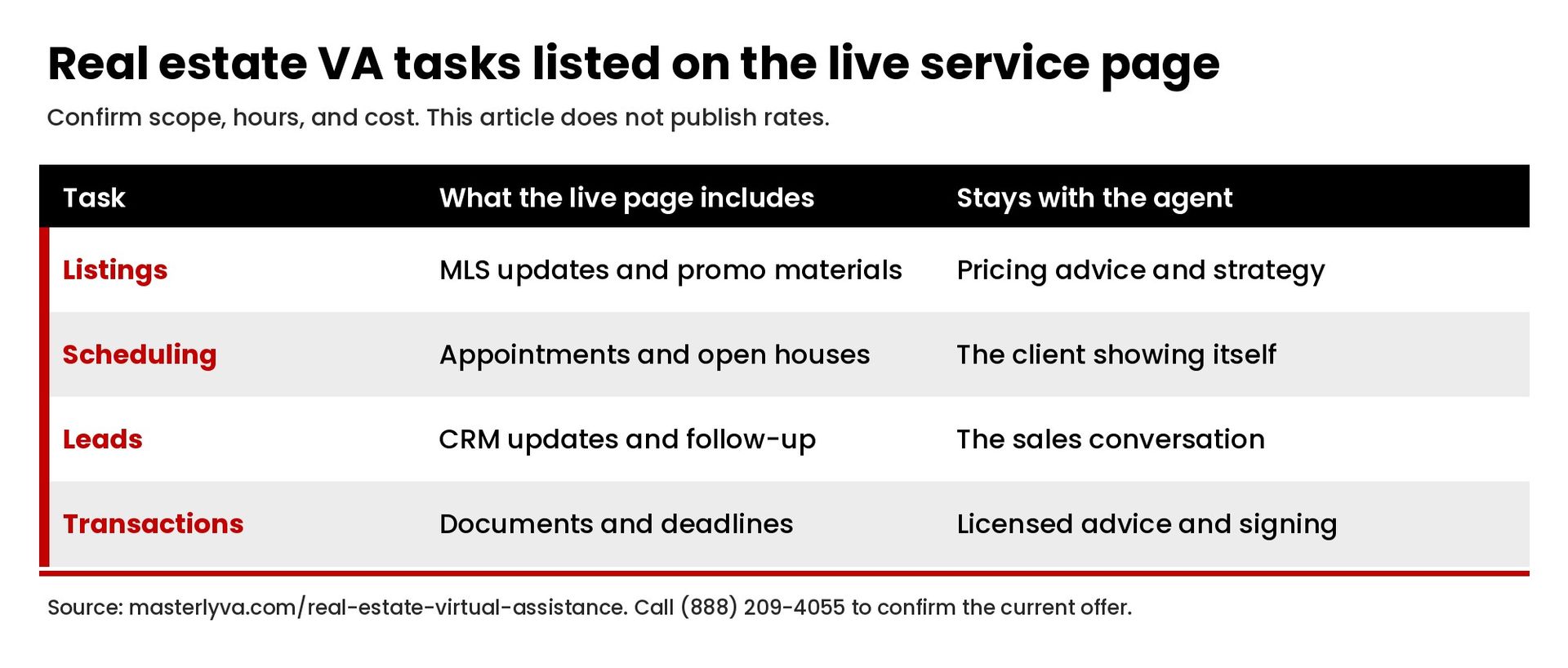
Masterly's live real estate page lists these service offerings:
- Listing management and property marketing: managing listings, MLS updates, creating property listings, and designing promo materials.
- Scheduling appointments, reminders, and open houses, including client meetings.
- Lead generation and follow-ups: qualifying leads, updating CRM software, and following up to support building client relationships.
- Transaction coordination: preparing documents, tracking deadlines, and helping the file move toward closing deals.
- Administrative tasks and data entry: files, email management, and accurate data.
- Client support and communication: being a first point of contact, sharing updates, and supporting client engagement.
Those are the key features of the live VA services for this industry. If a task is not on that page, confirm it before you assume it is included.
Business Operations, Administrative Support, Data Entry, and Email Management
A real estate VA can take on administrative support that keeps real estate operations orderly. Email management and data entry are often the first time consuming tasks to move, because they are frequent and easy to review. Client inquiries can be logged, routed, and answered according to a script the agent approves. Phone calls, if they are part of the match, should be confirmed in the hiring process; do not assume phone coverage from this article.
Communication tools matter. Shared calendars, inboxes, and CRM software let the assistant and the agent see the same pipeline. Cloud storage, if the team already uses it, should be set up with the access you approve. The assistant can handle repetitive tasks such as filing, status updates, and checklist tracking. Automate repetitive tasks only when the process is stable and the tool is agreed; this article does not name a specific automation product as a Masterly standard.
Other real estate professionals on a file, including title companies, lenders, and inspectors, often need documents and updates. Transaction management can include preparing those packets and monitoring progress. Confirm how far the assistant should go in those conversations.
High Value Activities, the Sales Process, and Business Growth
The point of hiring a real estate VA is to protect high value activities: client consultations, showings, negotiations, and closing deals. Revenue generating activities stay with the agent. The assistant supports the sales process by keeping listings current, following up with interested buyers, and keeping the transaction file complete.
Client relationships and client satisfaction improve when updates are timely and the first point of contact is reliable. Exceptional service is not a slogan. It is consistent communication skills applied to client inquiries, appointment reminders, and clear status notes.
Business growth in the real estate sector depends on more than a packed calendar. Market trends and market dynamics still belong to the agent's professional judgment. Market research, market analysis, and comparative market analyses that affect property values should be confirmed before they are delegated. They are not listed as a default item on the live service page, so they are not assumed here. A VA can help gather publicly available information the agent requests, then the agent reviews it.
Property management is a different line of work from listing and transaction support. Do not treat it as included unless the live page or your agreement says so.
Marketing Efforts, Communication Tools, and CRM Software
Property marketing is on the live page: listings, promo materials, and marketing tools. Marketing campaigns, marketing support, and marketing efforts should stay inside that scope unless you have agreed to more. Social media management appears on other Masterly service pages; confirm whether it is part of a real estate match rather than assuming it is.
CRM software is part of lead generation and follow-up on the live page. Skilled professionals can update records, log client engagement, and remind the agent to call a lead. The agent still owns the relationship and the advice given to interested buyers.
Real estate terminology and real estate workflows should be part of the briefing. Extensive training is described on the live page as industry-specific training so the assistant can work in the real estate market with less of a learning curve. Ask what that training covers for your market.
The Hiring Process and Business Processes for Real Estate Companies and Teams
The hiring process should start with a short list of tasks, the communication tools you use, and the hours you need. Real estate companies, independent real estate agents, brokers, and transaction coordinators can all use VA services, but the brief will differ. An assistant who is strong at managing listings may still need a walkthrough of your transaction management checklist.
Cost savings are a reason many teams look at virtual assistants rather than adding office space or a full-time desk hire. Savings vary. This article does not invent a figure. Confirm current flexible pricing options, hours, and scope with Masterly Virtual Assistants. There is no published rate here.
Monitor progress in the first weeks. If listings, email, and scheduling appointments are running cleanly, add transaction coordination or more marketing support. If something is unclear, tighten business processes before you add volume.
What Stays With the Agent During Real Estate Transactions
Real estate transactions still belong to the licensed professional. The assistant can prepare documents, track deadlines, and keep the file organized. The agent still explains terms to the client, negotiates, and signs off on the file. Title companies and other partners should hear from the person your process designates, not from an assistant who has not been briefed.
Marketing expertise, when it is part of the match, should stay inside the live scope: listings, promo materials, and the marketing tools you already use. Broader campaign strategy remains a conversation to confirm. If you want social media management, say so and check the related service pages rather than assuming it is bundled.
A clear split protects everyone. The VA handles the file work and the follow-up you have approved. The agent handles advice, pricing conversations, and the moments that require a license.
A Practical First Month
In the first month, start with managing listings, email management, and scheduling appointments. Share examples of a finished listing, a good client update, and your CRM software fields. Review the work twice a week. Then add transaction coordination on one live file, with the agent still reviewing every outgoing document.
Use that month to test business processes: how client inquiries are logged, how interested buyers are handed back to the agent, and how deadlines are flagged. If the process works, you can add more real estate operations without losing quality. If it does not, fix the process before you add volume.
Keep a simple scoreboard you can actually measure: listings updated, appointments set, files complete, and follow-ups sent. Do not invent conversion targets or cost savings figures. The useful test is whether the agent has more time for high value activities and whether clients still receive exceptional service.
Frequently Asked Questions
Can a real estate virtual assistant work in my CRM software?
The live page includes CRM updates as part of lead follow-up. Confirm which CRM software you use and what access the assistant will have.
Will the assistant write comparative market analyses?
Not unless you have confirmed that work. Comparative market analyses and advice on property values are professional judgments. Ask before you delegate them.
Do you list flexible pricing options here?
No. Flexible pricing options, if available, should be confirmed with the team at (888) 209-4055 or through contact us.
Delegate the File Work, Keep the Licensed Work
A real estate virtual assistant can take listing work, scheduling, lead follow-up, transaction coordination, and administrative support so the agent can stay on high value activities. Keep licensed advice, pricing of homes, and the final client conversation in the agent's hands. Confirm every task against the live real estate virtual assistance page, and confirm hours and cost before you hire.
To get matched, contact Masterly Virtual Assistants or call (888) 209-4055.